More Santiago Adventures

My second day in Santiago was also jam-packed with interesting things. I started out by walking the few blocks to Pablo Neruda’s Santiago house, where I took a tour around the premises (the only way they let you visit the house). Neruda must have been a genius when it came to property – he had three beautiful houses in areas that were relatively isolated in his day but have become prime locations nowadays. He loved the sea but couldn’t swim, so each of his houses is boat-themed…and this doesn’t just mean that he decorated with a nautical theme. In fact, many of the rooms in his Santiago home are shaped to remind you of a ship’s cabin.

His Santiago home is called La Chascona, a Quechua word that means dishevelled (in reference to his mistress – who later became his wife – and her mane of hair). It’s built on separate levels into the hillside, necessitating actually going outside to get from one to the other. We started on the bottom level, the original area Matilde lived in before Neruda married her. There’s a charming bar and a dining room which is low-ceilinged and very much like a captain’s dining room on a ship.

The next section of the house is higher up, and has a living room with floor-to-ceiling glass walls which once had a fantastic view of the Andes before all of today’s smog. There was a bar in this section of the house as well, and then, once we exited this part of the house to reach the library/study, we passed yet another one, filled with more of Neruda’s fascinating and eclectic collectibles!

Walking around the neighborhood near La Chascona:

After visiting La Chascona, I decided to climb the Cerro San Cristobal, after a mote con huesillo, an interesting sweet Chilean drink. There is a funicular up, but I didn’t think the hike would be too bad. Boy, did I underestimate it! It’s a pretty steep grade, and close to the top it no longer has guardrails, so my fear of heights kicked in and I decided that I was high enough to get a pretty good panorama.

I wrapped up the day at the Museum of Memory and Human Rights, built to explore and commemorate the human rights abuses under the Pinochet dictatorship. It’s really thoughtfully put together, walking through both government action and protests in a chronological fashion while using still photos, tv clips, and documents. A couple of the things that most struck me: television footage of the coup, including the bombing of the presidential palace of La Moneda; pictures drawn by children who experienced the oppressive regime; tv commercials pushing the “yes” and “no” votes for the final referendum that voted Pinochet out of power. (I have to say that I find it amazing that Pinochet actually relinquished power when he lost the referendum held to determine whether his government should continue.) There is also a display of photos of the disappeared that hangs 1-2 stories up over the central gallery. When you go up to the next floor (which overlooks the central gallery), there is a little room walled in glass in front of that display, with lights that look like candles making it a poignant shrine.

Museum of Memory and Human Rights

Museum of Memory and Human Rights

The next day was spent quietly, finding a laundromat, going to different airlines to price tickets to various places as I tried to figure out where I wanted to go next (and where I actually had enough time to go to). And I admit it, I finally gave in to the craving for some real coffee instead of the prevalent Nescafe and went to Starbucks!

Some more sights of Santiago:

Arrival in Santiago de Chile

OK, I’m back! I’ve gone to Chile, returned to Buenos Aires, bussed to Cordoba, returned once more to BA, and then flown back to the States, where I’ve been busy relaxing, preparing for my Southeast Asia trip, and…not catching up on my blog. Oops! But I figure you don’t want excuses now, you want to see my pictures or read my oh-so-charming words. Right? Right! So here goes…

I arrived in Santiago rather later than expected, given the slow transit time through Customs and the hideous traffic that we ran into in Santiago itself. Santiago has three or four bus stations, all located relatively close together, so there were all of the other inter-city buses to contend with. And then there was the Friday night traffic in general.

I got off, a little overwhelmed by the lights and the crowds, and found my way to an ATM as I had absolutely no Chilean pesos whatsoever. I was a little nervous being in a big, unknown city after dark, but I quickly felt very comfortable in Santiago, and safer than in many an other city. (That’s not to say that there aren’t pick-pockets or bad areas, but honestly, Santiago is known for being one of the safest cities in South America.) I also quickly found out how very nice and welcoming Chileans are, as when I asked a young woman where the metro was, she walked me to the station, showed me where to buy a ticket, and told me in which direction to go.

Accustomed to the dearth of small bills in Argentina, I very apologetically offered my fresh-from-the-ATM 10,000 peso bill (about US$20) for my 600 peso ticket. The lady in the ticket booth didn’t even blink, just gave me my change and my ticket and sent me on my way!

The next surprise was the subway. Trains come only a few minutes apart, and are spotlessly clean and modern, comparable to (or better than!) many a Northern hemisphere subway system.

My hostel (called Nomades Hostel) was in the Bellavista neighborhood, once known as being the bohemian area of town. After all, it’s where Neruda had one of his three houses. It didn’t seem too artsy nowadays, but it was a pleasant area in which to stay, with a couple of streets full of restaurants (the street of nice restaurants versus the bar-filled street). My hostel had apparently given up on my arriving, since I was pretty late, but I managed to check in without trouble. They even moved me to one of their empty dorm rooms, so for most of my stay, I essentially had a private room for the price of a dorm bed!

My first day, I decided on a free walking tour since it’s a great way to learn about a city. To kill time until the tour, I set out to Plaza de Armas, the historic city center and where the tour was to start. It’s a perpetually busy square that’s predominantly pedestrian – the first time I saw it, there was some kind of festival going on that celebrated Bolivian dancers and bands. I popped into the Cathedral but had to leave fairly quickly – while mass wasn’t going on, some religious broadcast by Radio Maria started while I was there and I didn’t want to disturb anyone.

Plaza de Armas - the Cathedral and post office

Plaza de Armas – the Cathedral and post office

I checked out the inside of the central post office, and went to the National History Museum (which had some amazingly preserved old clothes) which is located in an old governmental building.

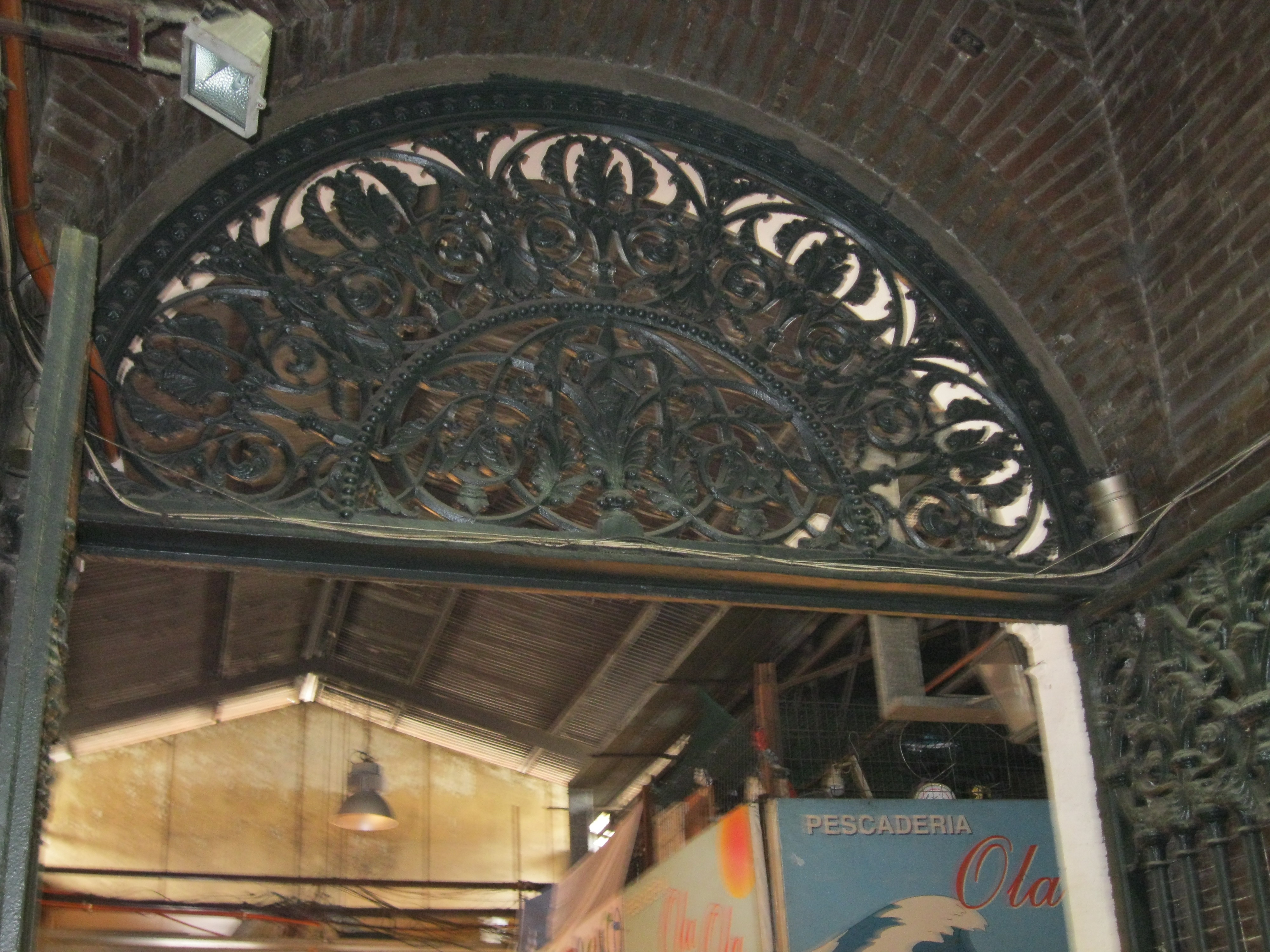
I had time to head out for lunch, so I went to the Central Market to get some of Santiago’s vaunted seafood. I had heard that the restaurants around the outer wall of the market were much cheaper and less touristy, so I attempted to find one of them, but ended up accidentally in one of the most expensive. Oh well! I found my meal of chupe de mariscos – a type of seafood stew – tasty, if not cheap.

Central market

Central market

Interior of the Mercado Central

Interior of the Mercado Central

I hurried back to Plaza de Armas after lunch, and headed out on my walking tour, which was really enjoyable. Not only did we walk through several different, charming historic barrios (Santiago is extremely walkable, another point that made me absolutely love my stay), but we got very dramatic explanations of the various sights. (Apparently our guide’s other job is as an actor.) Unfortunately, there is a lot of construction going on right now, so we weren’t able to see the presidential palace of La Moneda, and we learned that the most-vaunted museum in the city (the Pre-Colombian Museum) was still closed for renovations.

On the tour, I met another young woman named Samantha. We hit it off and went for drinks with some others from our tour group and then hung out and had dinner at one of the slightly pricier seafood restaurants. I am now in love with grouper – it’s a delicious fish! And I had a great time with great people, a good omen for the rest of my South American travels!