On Saturday, I decided that I was going to visit the Wat at Doi Suthep, perched on one of the hills above Chiang Mai, despite the clouds that wisped over the hill.
I grabbed a songthaew to Chiang Mai University/the zoo, where there was a songthaew line to go up to Doi Suthep. When we had ten people, the cost was forty bahts per person. On the way up, I started chatting with a Frenchwoman who turns out to be a math prof. (Tough arena to be a woman in, so props to her!) We decided to travel together during the day’s explorations.
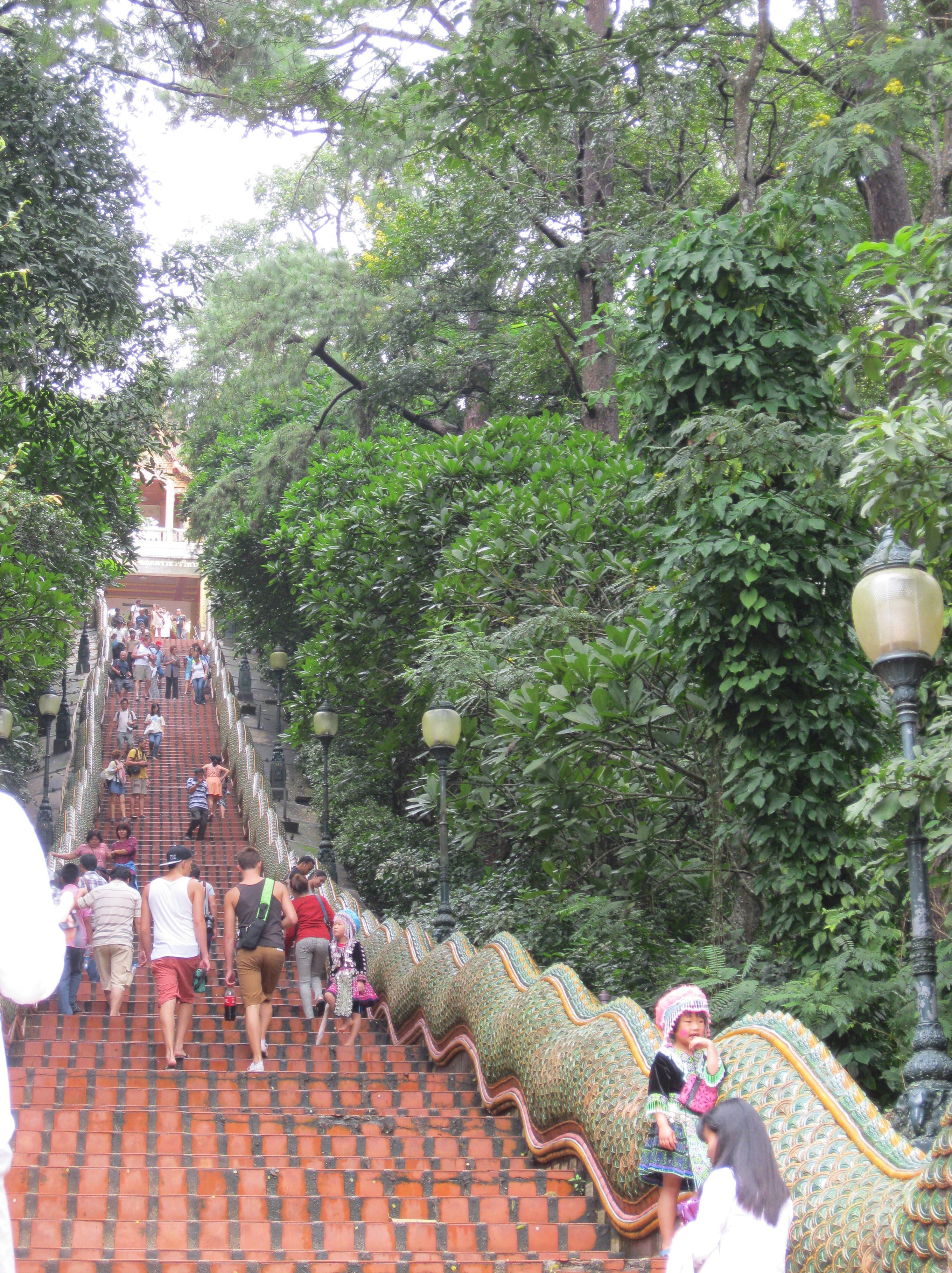
First came the 306 steps up to the temple complex, lined with little touristy booths. Climbing that many steps in the humidity made me realize that despite all the walking and climbing I’ve been doing, I still need to get in better shape! Ah well, the killer humidity is my excuse, right?!
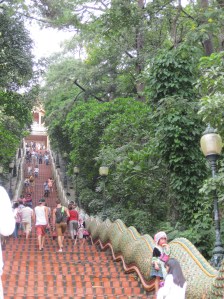
The 306 stairs to Wat Doi Suthep

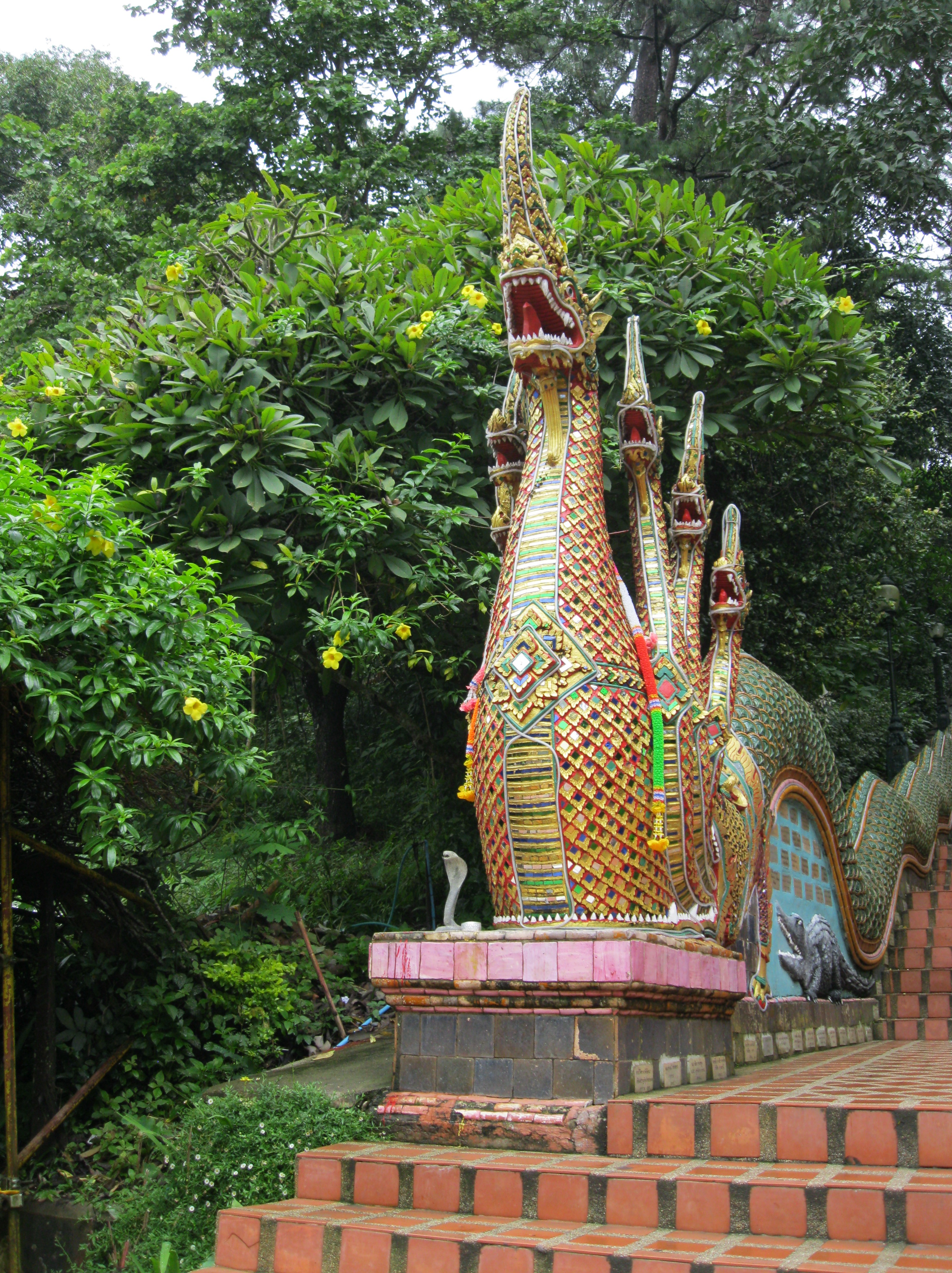
A naga guards the stairs up to Doi Suthep
The Wat really is magnificent, with a big golden chedi at its center. There were a ton of tourists and I felt a bit bad for contributing to the camera-clicking hordes, as people went for legitimate religious purposes, getting blessed by the monks. (I know people who aren’t Buddhist who do that on their visit. While the blessing from a monk would have been cool – despite our differences in religion – the appropriate respect/bowing/kneeling didn’t make me comfortable as a non-Buddhist, so I decided to pass.)

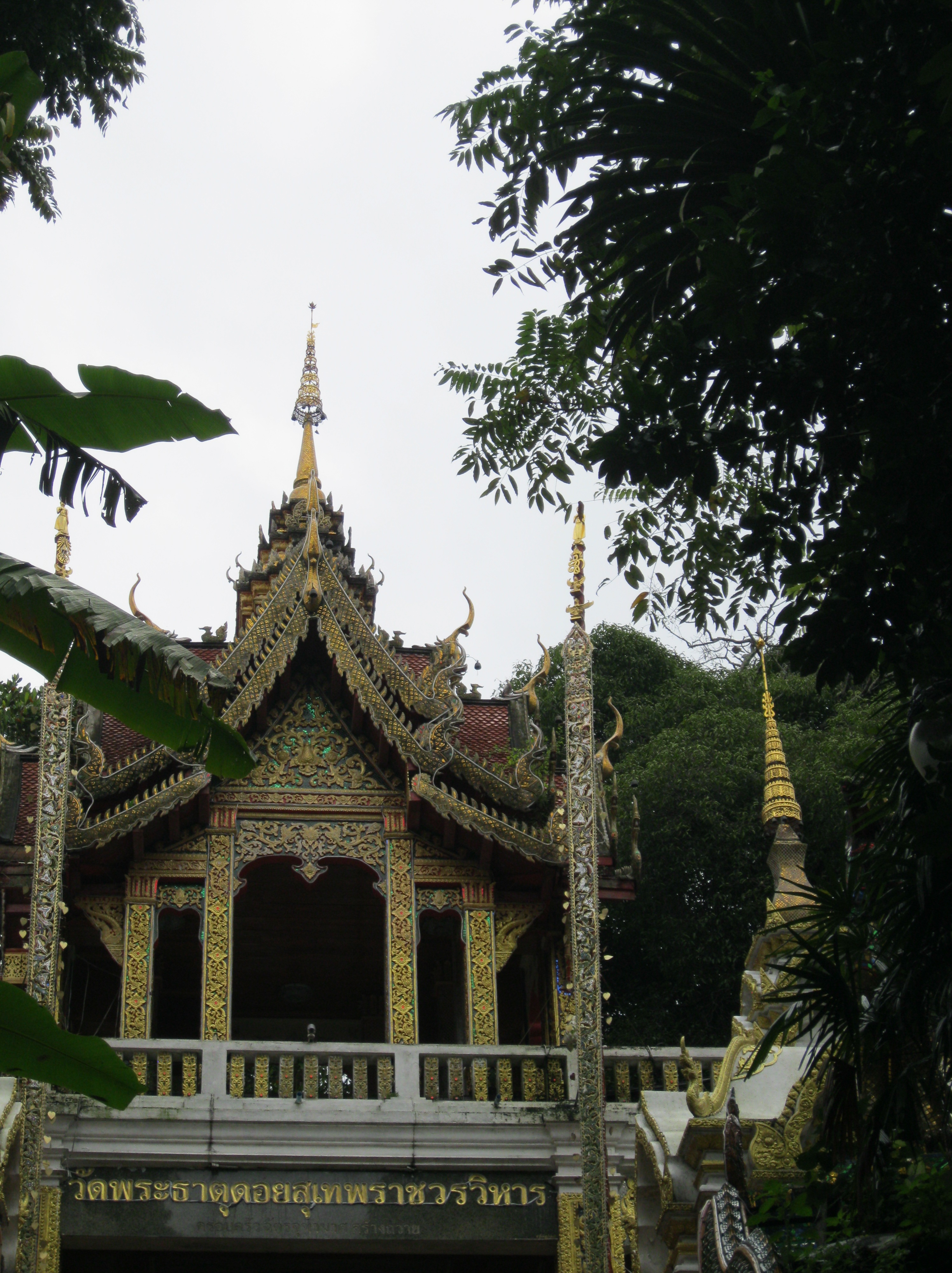
First view of the Doi Suthep complex
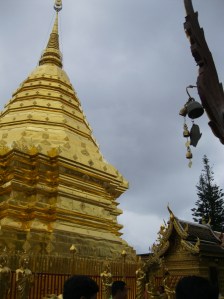
Golden Chedi Doi Suthep

Some of the Lanna (northern Thai) red and gold painting

Doi Suthep

Golden Chedi and Temple Buildings

Another golden Doi Suthep view

Me (in elephant pants!) at Doi Suthep

Another angle view of the Doi Suthep chedi
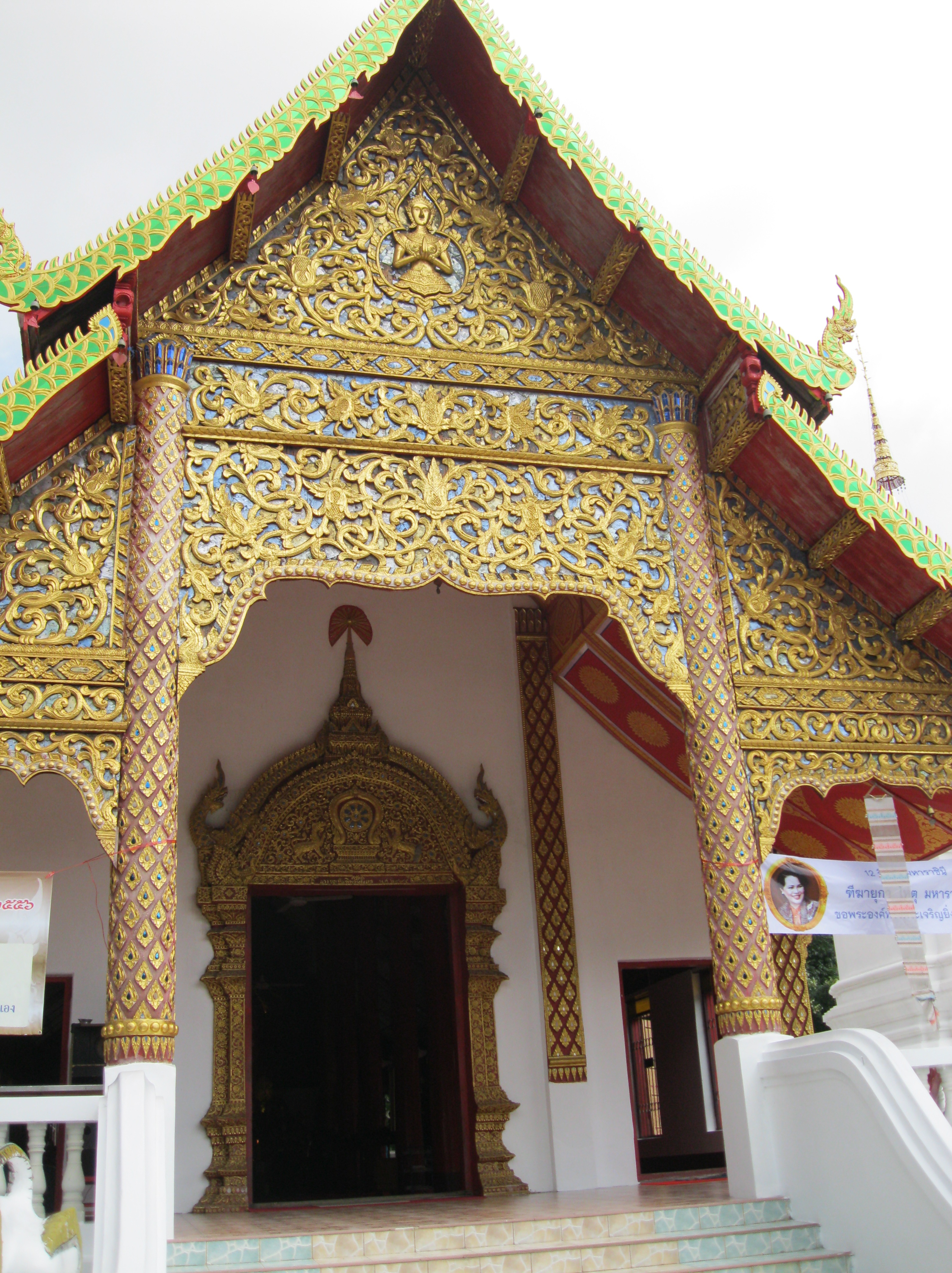
Some of my favorite parts of the Wat weren’t the bright gold centerpiece, however. The outer ring of the temple had a bunch of smaller buildings with glorious detail and fewer people – hidden gems, if you like, though I doubt anything outside of the monks’ quarters is hidden there with all the tourists and pilgrims!

Shutters at Doi Suthep

Looking down the hillside

Small temple at Doi Suthep

Roof and flowers, Doi Suthep

Greenery around the outer loop at Doi Suthep

Cool angle of gables and window decorations at Doi Suthep

More gables!

And still more gables!

An image of the sacred elephant that picked the spot for Doi Suthep

What’s a MOM?
After the Wat, I decided to head to the Hmong village further up the mountain. I’d heard it was very touristy and commercial but still a decent place to look at Hmong handicrafts. As we popped into a songthaew, the skies opened in a typical wet season deluge. We were happy to be dry!
We headed up in our rattling vehicle (which may have been an unofficial songthaew as it wasn’t bright red and was a different make of truck) and dropped off the two other passengers at the palace. They had a very difficult time with the driver telling him not to wait or return for them since they didn’t know how long they would be.
Off we went again, only to stop shortly after one of the curves on the road in the middle of nowhere. The French prof and I looked at each other in dismay as we realized that we were completely dependent on our driver. The driver yelled “toilet” at us and disappeared for a few minutes. Weird and uncomfortable in the middle of a deserted road where another Thai driver could easily rear end us, but in the end no harm done. We continued and were delivered to the village. We didn’t bother on the extended explanations of not to wait for us after the other passengers’ experience, just paid and headed to the village.
The village seems to be divided into two parts, the upper looking like it was where people actually lived, the lower part being a long, straggling loop lined by shops.

The Hmong village
In many, we could see Hmong women sitting and embroidering. Some of their signature work is cross stitch. I found a purse I really liked and for only the second time in my life bargained for the price! (The first time was at the Night Bazaar in Chiang Mai the previous night.) The lady quoted me a price, I countered with one 30 bahts (about 16%) lower, and she countered with ten bahts higher than my price. All very nice and easy! I suppose I could have bargained harder but honestly I’m not sure how respectful it is to try to get a rock bottom price for someone’s artisanal work. I have friends who embroider and I’ve done cross stitch – it’s time consuming! Anyway, I liked spending my tourist dollars directly with women entrepreneurs. It tends to be a good way to have a positive impact on a community (minus the not so positive impact of the “touristiness” of the lower village).

The purse I bought held by the Hmong lady who made it
All this time, we saw the driver circling through the village, waiting for us. I’m sure it was harmless, but being followed didn’t give us a great feeling and we decided to take a different songthaew down. Unfortunately we weren’t able to communicate this well, which I do feel bad about, as I have a feeling we came off more as privileged and spoiled westerners when the reality was that we were two women in an uncomfortable situation.
We popped in briefly to the little dark museum, getting trapped long enough by another violent rain shower that our eyes adjusted and let us read the posters there. The museum is near a sign for a “demonstration field” of opium poppies which we decided to pass on. We then had lunch in a local noodle shop and headed to our drop-off point.

The rain is moving into the Hmong village…

Rain! Viewed from the museum
Sadly, the multitude of red songthaews we had seen earlier had disappeared and there was just one minus a driver. We asked where the driver was and a cafe owner started to look for him. Then the songthaew tout said a spate of Thai that probably meant we were not to be helped since we’d refused going with the other driver. The songthaew mafia was closing ranks, and I had a bad feeling we might get stranded.
Luckily, a tour group was leaving just around then and I honed in on the one tourist who looked like an English-speaker. I explained to him that we had no other way down the mountain and could he ask whether the tour group could take us down to anyplace where we could get another songthaew. To my amazement and relief, he did, and the tour guide acquiesced! We were saved by the kindness of strangers! It was a wonderful feeling to feel safe again, even if the worst that would probably have happened to us would likely have been some “kind Samaritan” charging us five times the going rate for a lift in his car.
I still wish I knew how to have handled the original situation with more grace, but I’m honestly not sure what we could have done. If anyone has any suggestions, please let me know!
To wrap up the day, we went to the Saturday night “walking street”, one of the weekly markets that are an institution in Chiang Mai. We had been hoping to see a lot of artisanal handicrafts, but on the whole were more impressed with the Hmong village. It was a lot of fun, though, and I tried a random sampling of street food. We saw a couple of rhinoceros beetles (fantastic!), which I think the locals catch to have fight each other (not so fantastic). We saw a stall selling various cooked bugs, considered a delicacy. And lots and lots of “elephant pants”, harem style cotton pants that all the tourists buy (and that I admit I got a pair of since I needed to do laundry!)
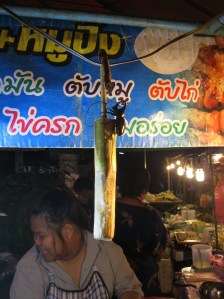
Rhinoceros Beetle at Chiang Mai’s Saturday Walking Street
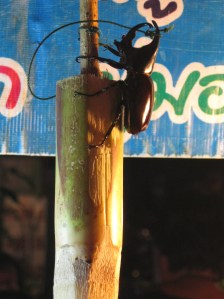
Rhinoceros Beetle Close-Up






 trails untrod